Most desert tours show you sand. A Dubai Desert Conservation Reserve safari shows you why that sand matters. This is the UAE’s first national park, 225 square kilometers where endangered Arabian oryx have returned from extinction, where your visit funds actual conservation work, and where access is deliberately restricted to protect what took decades to restore.
Desert Safari Gulf operates as one of the handful of authorized tour providers permitted inside these protected boundaries. The difference isn’t subtle. While commercial desert zones prioritize entertainment volume, reserve safaris focus on something increasingly rare: genuine wildlife encounters in a landscape that functions as deserts should, without the noise and crowds that define typical tourist experiences.
What Makes Conservation Reserve Safaris Different
The reserve was established in 2003, transforming private conservation efforts into the UAE’s first protected desert ecosystem. By 2007, it had expanded to cover roughly five percent of Dubai’s total land area a substantial commitment in one of the world’s fastest-growing cities.
Access is controlled through licensing. You can’t drive yourself in. There’s no public entrance or drop-in visitor center. Entry requires booking through operators like Desert Safari Gulf who meet strict environmental standards, employ trained naturalist guides, and contribute directly to habitat protection through access fees. This gatekeeping isn’t bureaucracy. It’s what keeps wildlife undisturbed and ecosystems functional.
Protected Habitat, Not Commercial Entertainment
Standard tours happen in open zones built for mass tourism. The reserve operates differently, routes avoid sensitive breeding areas, speed limits are enforced, and group sizes stay deliberately small. Indigenous species move freely without constant vehicle pressure. Vegetation regenerates naturally. Wildlife behavior remains authentic rather than conditioned to tourist presence.
The contrast is immediate. No traffic lines on the sand, no overlapping convoys, no circus atmosphere. Just open desert and the kind of silence that lets you actually hear wind moving across dunes.
Why Authorized Operator Licensing Matters
Not every company claiming reserve access holds legitimate permits. The Dubai Desert Conservation Reserve Authority maintains a short list of approved operators, those demonstrating consistent environmental compliance and meaningful conservation contributions. We operates within this framework, ensuring your safari meets the reserve’s requirements while delivering quality wildlife experiences.
Unlicensed tours damage what makes the reserve valuable. Unauthorized vehicles ignore designated tracks, disturb nesting sites, and introduce visitor pressure that undermines restoration work. When booking, verify licensing. It’s the difference between contributing to conservation and accidentally funding its erosion.
Wildlife You’ll See on Reserve Safaris
Sightings happen on the animals’ terms, not yours. Early morning and late afternoon offer the best chances, that’s when temperatures drop enough for oryx herds to graze openly and gazelles to move between feeding areas. What you encounter depends on season, timing, and luck. The protected environment increases probability significantly, but wildlife doesn’t work on schedules.
The reserve supports over 40 mammal and reptile species, plus more than 200 recorded birds when you include seasonal migrants. Experienced guides know watering holes and movement patterns, but they can’t guarantee outcomes. That uncertainty is part of what makes sightings meaningful.
Arabian Oryx and Desert Gazelles
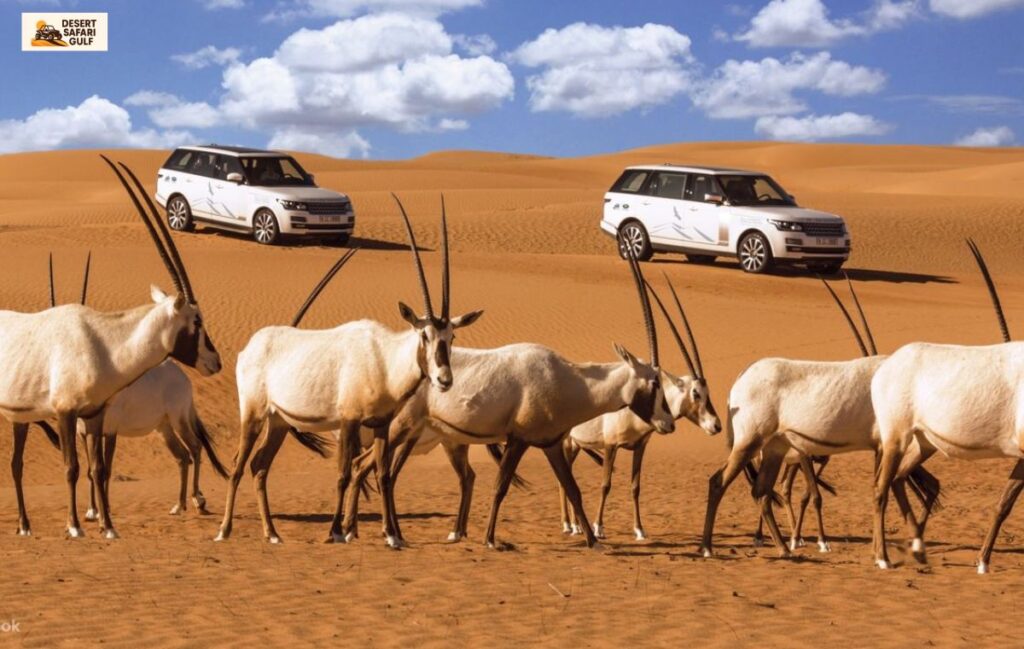
The Arabian oryx is the flagship species a striking white antelope hunted to complete extinction by the 1970s before captive breeding brought it back. The reserve now hosts one of the region’s most successful reintroduction populations. Herds often graze during dawn and dusk hours, their white coats reflecting heat in adaptations evolved for surviving 50°C summers.
Sand gazelles and Arabian gazelles are equally iconic but more skittish. These elegant browsers rely on speed and sharp senses. Safari encounters typically happen at distance, watching them dart across dune slopes or pause cautiously before feeding. You might also spot Arabian red foxes, Cape hares, or the remarkable Sand fish lizard that literally swims through loose sand.
Raptors and Seasonal Bird Migration
Desert larks and eagle owls nest here permanently. But the real spectacle arrives during autumn and spring migrations when the reserve becomes a stopover for species traveling between Africa and Central Asia. Steppe eagles, spotted eagles, and various falcon species hunt over the dunes during winter months.
Guides trained in wildlife identification transform distant specks into detailed sightings, adding educational depth that turns simple observation into actual learning. Even common species take on new significance when framed by dunes stretching to the horizon.
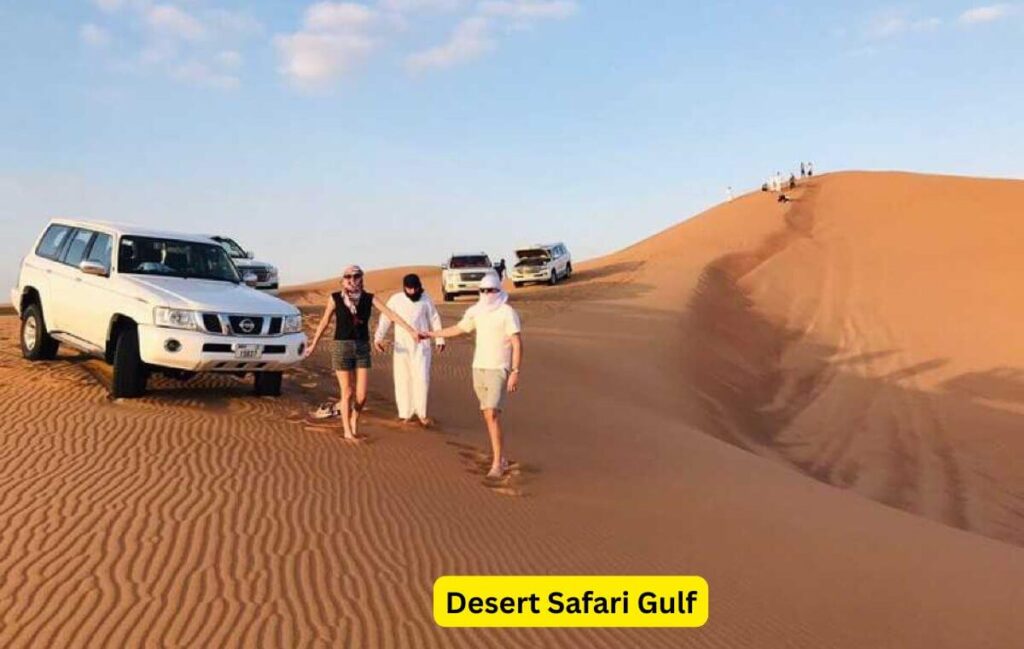
Safari Experience Options with Desert Safari Gulf
Authorized operators offer several formats, each designed to balance visitor experience with conservation priorities. No high-speed dune bashing, no blaring music, no staged entertainment. What you get instead is space, silence, and immersive encounters that require patience.
Guides understand ecology and animal behavior, not just driving routes. They know when to stop the vehicle and let a moment unfold naturally rather than rushing to the next checkpoint. It’s a fundamentally different approach.
Morning Wildlife Safaris
These launch at sunrise, timed for peak animal activity while temperatures remain comfortable. Your guide navigates dune corridors and gravel plains, stopping frequently to scan for oryx herds, gazelles, and raptors. There’s time for walking, examining tracks, inspecting plant adaptations, or simply absorbing the scale.
Morning light transforms everything. Shadows stretch long, colors shift from gold to amber, and wildlife moves with urgency before heat forces them into shelters.
Evening Conservation Safaris
Late afternoon departures offer similar wildlife viewing as temperatures drop. The advantage: sunset over protected dunes creates photography conditions that rival anywhere in the region. Golden hour warms the sand, long shadows add drama, and twilight often coincides with increased bird activity.
Evening safaris typically incorporate cultural elements like falconry demonstrations or traditional coffee service as daylight fades, wildlife observation, cultural context, and natural beauty woven together without any element overwhelming the others.
Private and Luxury Safari Options
Full-day private safaris offer extended time with dedicated guides and premium vehicles. These tours allow flexible pacing, spending extra time with wildlife, revisiting areas if conditions improve, incorporating longer walking segments. Private formats also permit specialized focuses: photography-oriented tours, educational safaris emphasizing ecology, or luxury experiences combining observation with gourmet dining.
Two eco-resorts operate within reserve boundaries, Al Maha Desert Resort and Sonara Camp. Staying there provides multi-day access without day-visitor crowds. Villa accommodations include twice-daily safari activities, creating the most comprehensive way to appreciate what the reserve protects.
Booking Your Conservation Reserve Safari
Access is genuinely limited. The reserve’s daily visitor cap means popular time slots, especially October through April. Early planning improves your chances of securing preferred dates and specific formats like sunrise photography tours.
Choosing the right operator affects everything: safari pacing, guide knowledge, vehicle comfort, and whether your experience respects both environment and expectations. Quality varies even among licensed providers.
Verifying Authorized Operators
Confirm any operator holds an official Dubai Desert Conservation Reserve Authority license. Desert Safari Gulf displays licensing prominently and provides permit numbers upon request. Check membership in recognized tourism or conservation associations, indicators of industry standard adherence.
Red flags include prices significantly below market rates, promises of guaranteed sightings, or aggressive dune bashing descriptions. Established operators build reputations on respecting both environment and visitor experience, not cutting corners.
Pricing and What’s Included
Half-day conservation safaris typically start around AED 400-600 per person, covering hotel transfers, guided wildlife drive, cultural experiences, and refreshments. Full-day private tours range AED 1,200-2,000+ depending on customization. Luxury overnight experiences exceed AED 3,000 per night, all-inclusive.
These prices reflect limited access, premium vehicles, specialized guiding, and conservation fees funding reserve management. Inclusions should be crystal clear: transfer coverage, safari duration, group size limits, and optional add-ons.
Best Seasons for Wildlife Viewing
October through March offers ideal conditions, comfortable temperatures between 15-25°C and peak wildlife activity. Winter coincides with bird migration seasons, dramatically increasing species diversity. Summer visits are possible but challenging, with temperatures exceeding 45°C pushing most wildlife into shelter during daylight.
Shoulder seasons, April, May, September: offer middle ground with fewer crowds and moderate temperatures. Desert Safari Gulf adjusts safari timing seasonally to maximize both safety and observation opportunities.
Conservation Guidelines and Safari Rules
The reserve operates under strict regulations protecting wildlife and fragile ecosystems. These aren’t arbitrary, each rule addresses impact that, multiplied across thousands of visitors, would undermine conservation work. Compliance is mandatory, and violations can result in operators losing licenses permanently.
Understanding guidelines before your safari sets appropriate expectations. This isn’t a place where you wander freely or improvise adventures. The boundaries exist for good reason.
Prohibited Activities
Off-road driving outside designated tracks is strictly forbidden. Even single vehicles create damage persisting for years, tire ruts disrupt water flow, destroy vegetation, create erosion channels. All movement happens on established routes maintained by reserve management.
Feeding wildlife, approaching animals without guide permission, collecting natural materials, littering, and unauthorized drone use are prohibited. Flash photography near animals causes stress and alters natural behaviors. The principle is simple: observe without interfering.
Ethical Wildlife Viewing Standards
Animals are never chased, baited, or harassed during authorized safaris. Sightings happen organically, at distances allowing natural behavior to continue uninterrupted. We guide recognize stress signals and adjust positioning accordingly, if an oryx herd shows agitation, the vehicle moves back or changes approach.
This restraint benefits everyone. Wildlife remains undisturbed, and visitors experience authentic behavior rather than animals reacting to human pressure. It’s the difference between watching and intruding.
How Your Safari Supports Conservation
Every booking generates revenue through access fees paid to the Dubai Desert Conservation Reserve Authority. This funding directly supports ranger salaries, anti-poaching patrols, habitat restoration, veterinary care, and research programs. Your visit becomes a conservation investment, a fundamentally different model than entertainment-focused tours.
The reserve also demonstrates that conservation can coexist with tourism infrastructure when properly designed. In a region historically criticized for prioritizing growth over ecology, it proves economic and environmental goals don’t have to oppose each other.
Breeding Programs and Wildlife Research
Breeding programs for Arabian oryx and desert gazelles operate within the reserve, guided by careful genetic management. Animals are monitored through GPS collars, camera traps, and field surveys tracking herd health and breeding success. This data informs grazing rotation plans and bloodline introduction decisions.
The reserve participates in Species Survival Plans coordinated internationally, particularly for the Arabian oryx. These networks ensure conservation work here connects to larger efforts globally rather than existing as an isolated project.
Scientific Partnerships
The reserve supports research partnerships with universities and conservation organizations studying desert ecology and climate adaptation. Scientists use the protected environment to examine how native species respond to temperature extremes and which management strategies yield the best long-term outcomes.
Findings are published and shared, contributing knowledge that benefits similar ecosystems across the Middle East. The reserve operates through formal collaboration with the Emirates Wildlife Society in association with WWF, bringing global best practices into local implementation.
Reserve Safaris & Standard Desert Tours
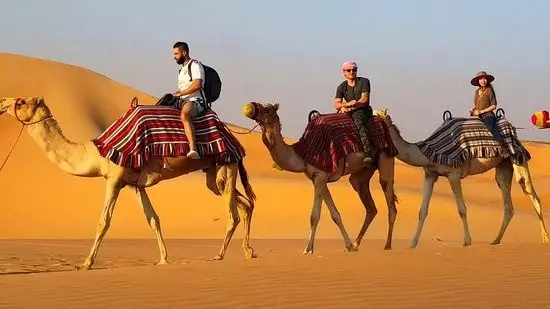
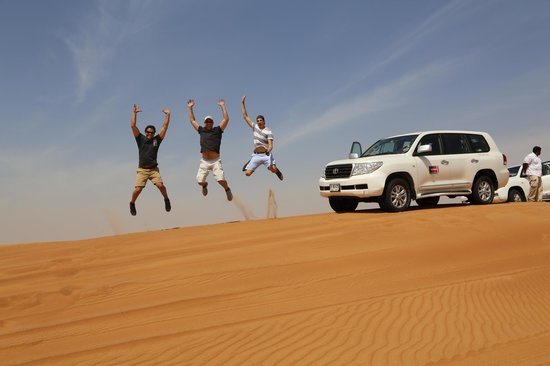
Understanding the difference explains the pricing gap and sets proper expectations. Standard safaris happen in open zones and focus on entertainment, high-speed dune bashing, camel rides, belly dancing, buffet dinners. They’re designed for volume, often accommodating hundreds of visitors nightly.
Conservation reserve safaris operate under completely different philosophy. Routes are restricted, speeds controlled, and the entire approach centers on respecting ecosystems rather than treating them as amusement parks. It’s fundamentally different, one that appeals to travelers valuing substance over spectacle.
The experience quality reflects this. Reserve safaris with Desert Safari Gulf emphasize guided exploration and storytelling. Guides explain survival adaptations, identify tracks, interpret behaviors most visitors would miss. Standard tours prioritize activity volume, cramming in as many experiences as possible with minimal educational component and limited wildlife observation opportunity.
Frequently Asked Questions
Can you visit the Dubai Desert Conservation Reserve without booking a safari?
No. The reserve requires entry through licensed operators or eco-resort guests. This controlled access protects wildlife and maintains sustainable visitor numbers.
How much do safaris in the conservation reserve cost?
Half-day safaris start around AED 400-600 per person. Full-day private tours range AED 1,200-2,000+. Prices reflect limited access, conservation fees, and specialized guiding.
What’s the difference between reserve and regular desert safaris?
Standard safaris focus on entertainment like dune bashing and shows. Reserve safaris prioritize wildlife observation, education, and minimal impact with controlled routes and small groups.
What wildlife will I see?
Arabian oryx are most reliable, especially during cooler hours. Sand gazelles, Arabian gazelles, raptors, desert larks, and foxes appear frequently. Sightings depend on season and timing.
Are private safaris available?
Yes. Desert Safari Gulf offers private tours with dedicated guides, flexible pacing, and customization for photography or extended wildlife observation.
Which operators can access the reserve?
Only operators approved by the Dubai Desert Conservation Reserve Authority. Desert Safari Gulf holds official licensing and meets strict environmental standards.
Can families with children join?
Yes, particularly older children who engage with educational aspects. Some luxury properties set minimum ages (10-12 years). Check specific policies when booking.
What should I wear and bring?
Lightweight layers in neutral colors, closed-toe shoes, sunscreen, sunglasses, hat, and binoculars. Mornings can be cool, so bring a light jacket for dawn safaris.
When is the best time to visit?
October through March offers ideal temperatures (15-25°C) and peak wildlife activity. Winter coincides with bird migrations, increasing species diversity significantly.
How long do safaris last?
Half-day safaris run 3-4 hours around dawn or dusk. Full-day experiences extend 6-8 hours with longer drives and walking segments.
Is photography allowed?
Yes, but flash photography near animals is prohibited. Drones require advance permits. Desert Safari Gulf accommodates serious photographers with adjusted pacing for optimal lighting.